Why Panic Makes It Worse
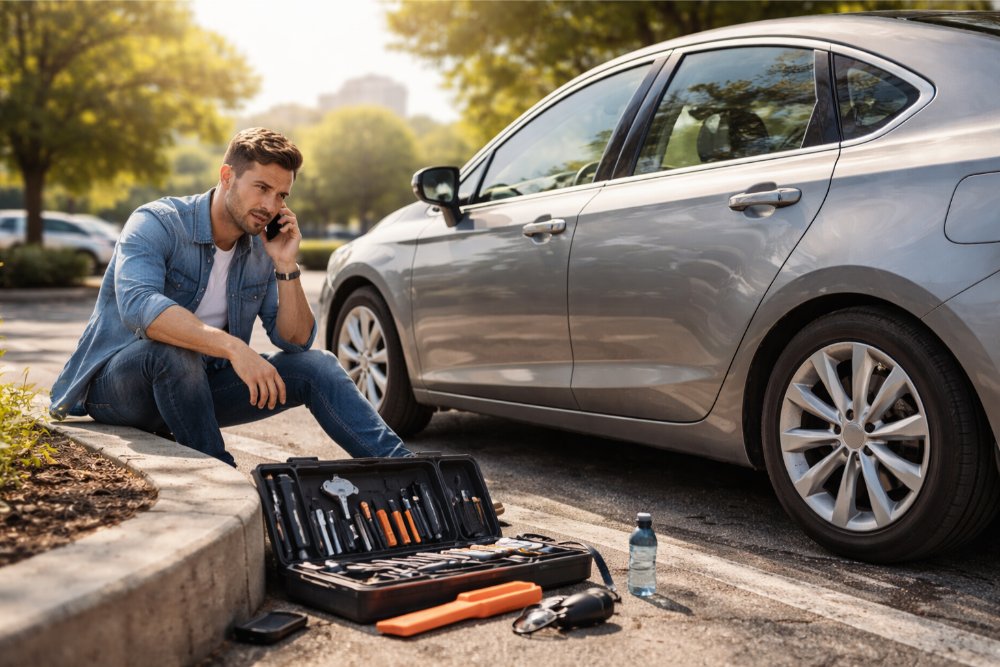
The moment you realize your keys are inside the car and the doors are locked, your body reacts before your brain does. Heart rate jumps, breathing gets shallow, and suddenly the parking lot feels like a stage with an audience you never asked for. This reaction is normal. It is a basic stress response, the same one that once helped humans deal with real danger. The problem is that a car lockout is rarely dangerous, yet your nervous system treats it like an emergency. When adrenaline takes over, people start pulling door handles harder, yanking on window seals, or reaching for random objects to pry something open. That is exactly how paint gets scratched, weather stripping tears, and lock mechanisms get damaged.
Staying calm is not some motivational slogan. It directly affects the outcome. Fine motor control drops under stress, which means your hands literally become less precise. That is when people slip with metal tools, bend trim, or chip glass edges. Modern vehicles make this worse. Door frames are tighter, electronics are sensitive, and airbags are often mounted inside the doors. One wrong push with a rigid object in the wrong spot can interfere with internal components. I have seen perfectly good locks ruined not by criminals, but by owners who were simply overwhelmed and trying to “just get in quickly.”
The first practical step is to pause and slow your breathing on purpose. Inhale through the nose, exhale slowly, repeat. It sounds basic, but it lowers physical tension and helps clear thinking. Look around. Are you in a safe place? Is the car parked legally? Do you have your phone and identification with you? When your mind settles, the situation changes from a crisis to a problem with solutions. And there are always solutions that do not involve forcing your own vehicle open.
Understanding Modern Car Locks
Car locking systems today are more complex than most drivers realize. Mechanical keys still exist, but they often work together with electronic immobilizers, remote locking modules, and anti-theft systems. Even when a door lock looks like a simple cylinder, it may be connected to sensors that detect tampering. This is one reason improvised entry methods can lead not only to physical damage but also to electronic issues that are far more expensive to fix than the original lockout.
Weather seals and door frames are also designed with precision. Those rubber strips around the door are not decoration. They keep water out, reduce noise, and help maintain cabin pressure for proper airbag deployment. Prying the door even a few millimeters can deform the frame or compress the seal permanently. Later, the driver notices wind noise at highway speed or moisture inside the door. The connection to the lockout attempt is often forgotten, but the cause is right there. Windows are another weak point. Side glass in most vehicles is tempered. It is strong against pressure across its surface but vulnerable along the edges. Tools pushed into the gap between glass and frame can cause tiny fractures that spread over time.
There is also the matter of side curtain airbags and wiring. Many cars have airbag modules in the door or along the frame. Inserting rigid objects blindly can damage wiring harnesses or sensors. That does not mean airbags will suddenly deploy from a gentle push, but damaging components can lead to warning lights, system faults, and costly diagnostics. Understanding this helps shift the mindset. The door is not just a panel to bend; it is part of a safety system designed to protect you in a collision. Treating it roughly during a lockout defeats that purpose.
Safer First Checks
Before thinking about any entry method, a few calm checks can solve the situation without tools at all. Start with every door, including the trunk or hatch. It sounds obvious, but people often test only the driver’s door. Passenger doors, especially rear ones, are sometimes left unlocked. On some vehicles, the trunk release button on the remote may still work even if the main lock button does not, depending on how the system is configured. Access through the trunk and folding rear seats can be a simple, damage-free solution.
Next, consider spare keys. Many drivers keep a spare at home, with a partner, or at work. Calling someone to bring it may feel inconvenient, but compared to repairing a bent door frame, it is minor. Some newer vehicles also offer manufacturer apps that allow remote unlocking if the service is active and the vehicle has connectivity. It is not universal, and it depends on subscriptions and signal availability, but it is worth checking before doing anything physical to the car.
Roadside assistance memberships can also be part of the answer. Services provided through auto clubs or insurance often include lockout support. Trained technicians use specialized tools designed to minimize risk to the vehicle. These are not the same as random rods or coat hangers. Professional lockout tools are made to create controlled space and reach internal handles without forcing structural parts. If you are in Kitchener and need help fast, contacting a professional service such as an emergency locksmith kitchener is usually the safest route. They deal with modern lock systems daily and know how to avoid the common damage points drivers don’t see.
What Not To Do
Movies have created a lot of myths about getting into cars. The classic coat hanger trick is one of them. It may have worked decades ago on certain vehicles with simple vertical lock rods. Modern designs are different. Trying to hook something inside the door often leads to torn moisture barriers, bent linkage rods, or scratched glass. Even if you manage to unlock the door, you may later face issues like a handle that feels loose or a lock that no longer responds smoothly.
Wedges are another risk when misused. Professional inflatable wedges are designed to create a small gap without sharply bending the frame. Improvised wedges, especially hard plastic or metal ones, can crease the door edge. That crease may be small, almost invisible at first, but it affects how the door seals. Over time, this can lead to water leaks or rust in areas that were previously protected. Once metal is deformed, it rarely goes back to its original shape without bodywork.
Breaking a window should be an absolute last resort and only in a real emergency, such as a child or pet in immediate danger from heat. Side glass shatters into many small pieces, but injuries still happen, and replacing the glass involves cost, cleanup, and sometimes sensor recalibration. In normal lockout situations, breaking glass turns a manageable inconvenience into a repair job. Knowing what not to do is just as important as knowing the correct steps. Often, the best decision is to stop yourself from acting on impulse.
Choosing Professional Help
There is a reason automotive locksmithing is a specialization, not just a side skill. Vehicle entry without damage requires knowledge of lock designs, door structures, and the right tools for different models. A trained locksmith does not rely on force. They use techniques that create controlled space, protect surfaces, and manipulate internal mechanisms with precision. This approach reduces the risk to paint, seals, wiring, and the lock itself. It also saves time. What feels like an impossible problem to a stressed driver is routine work for someone who handles lockouts every day.
Professional locksmiths also understand key systems. Many cars today use transponder keys or proximity fobs that communicate with the vehicle’s immobilizer. If keys are lost rather than locked inside, the solution may involve programming a new key, not just opening the door. Attempting to bypass systems or using unverified tricks from the internet can create electronic faults that require dealership-level diagnostics. A locksmith equipped for automotive work can cut and program keys for many models on site, which is often faster than towing the vehicle elsewhere.
Calling a professional is not admitting defeat. It is choosing the option that protects your vehicle’s value and safety features. Cars are complex machines. Door panels hide wiring, sensors, and structural elements designed for crash protection. Letting someone trained handle the entry respects that complexity. In most cases, the cost of proper assistance is lower than the repair bill from a bent frame, damaged lock cylinder, or faulty window regulator caused by a rushed attempt.
Staying Safe While You Wait
Lockouts do not always happen in convenient places. Sometimes it is a dark parking lot, a roadside shoulder, or a cold winter evening. Personal safety comes first. If you are in traffic or near a busy road, move to a safer area if possible. Turn on hazard lights so your vehicle is visible. In cold conditions, staying warm matters. Even short exposure to low temperatures can be uncomfortable and distracting, which makes decision-making worse.
Keep your phone charged and share your location with someone you trust if the area feels isolated. This is not about panic; it is basic situational awareness. If you feel unsafe, contacting local authorities is reasonable. They may not always unlock vehicles, but they can ensure the situation remains secure while you wait for assistance. Remaining inside a nearby building, such as a store or service station, can also be a good option when available.
Stress drops once you have taken these steps. You have called for help, made yourself visible, and ensured your own safety. The lockout becomes a waiting period rather than an active struggle. That shift in mindset matters. When the technician arrives, you are clear-headed and able to explain the situation accurately, which helps them work efficiently and reduces the chance of misunderstandings about the vehicle or its locking system.
Learning From The Experience
A lockout is frustrating, but it can also be useful feedback. Many happen because of small habits. Placing keys on the seat while unloading groceries, relying on automatic locking features without thinking, or assuming a fob is in a pocket when it is actually in a bag. Noticing how it happened helps prevent a repeat. Some drivers choose to keep a spare key in a secure place at home or with someone they trust. Others review their vehicle settings to understand how auto-lock functions behave.
Technology can help as well. Some vehicles allow users to adjust locking behaviour through onboard menus. Understanding whether the car locks automatically when you walk away, or after a set time, can reduce surprises. Manufacturer apps, when available, add another layer of control. They are not perfect, but in certain situations they allow remote unlocking, which turns a major inconvenience into a minor delay.
The key lesson is that the goal is not just to get back into the car today, but to reduce stress next time. Knowing that professional help is available, understanding your vehicle’s systems, and adjusting a few habits can make future incidents less likely. Experience builds confidence. The next time something unexpected happens, you are less likely to panic and more likely to respond with the calm, methodical approach that keeps both you and your vehicle in good shape.
Respecting The Vehicle
It is easy to see a car door as a barrier when you are locked out. In reality, it is part of a carefully engineered structure. Doors contribute to side-impact protection, support airbags, and help maintain the rigidity of the body. The seals keep out water and dust. The locks interact with security systems designed to deter theft. Treating these components with respect during a lockout protects more than convenience. It protects the safety systems you rely on every day.
Drivers often invest time in maintaining engines, brakes, and tires, but overlook how delicate body and lock components can be. A scratched frame, a weakened seal, or a misaligned latch may not show immediate dramatic failure. Instead, problems appear slowly. Wind noise. Water ingress. A door that no longer closes with the same solid feel. These issues trace back to moments when force replaced patience.
Approaching a lockout with calm thinking, basic checks, and a willingness to call trained help turns a stressful event into a manageable one. The car remains undamaged, the safety systems intact, and the cost controlled. That is the real solution. Not just getting inside, but doing so in a way that respects the machine you depend on every day.