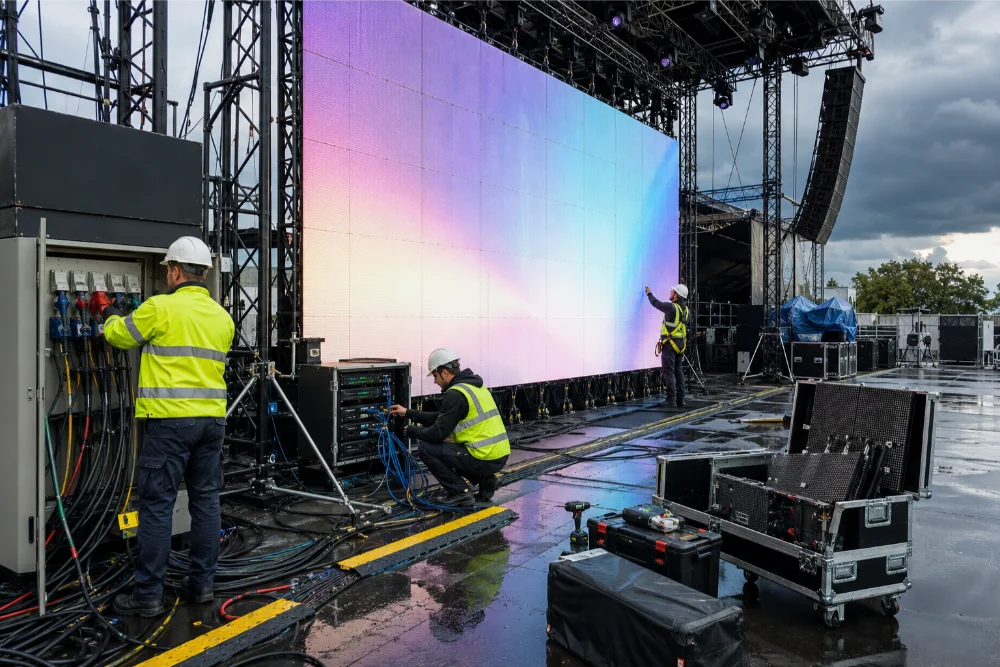
A concert LED wall setup is usually judged by the crowd only after it turns on. The crew knows the truth much earlier. If power is unclear, rigging is rushed, weather is ignored, or spares are buried in the truck, the wall is already at risk.
A setup checklist does not replace qualified technicians, but it helps keep important questions from getting lost during load-in.
Power and Signal
The team should confirm power availability, distribution, grounding, cable paths, backup options, and who is allowed to make electrical connections. Signal should be mapped from source to processor to wall, with backup cables and clear labels. If a camera feed, media server, or switcher is involved, the signal chain should be tested before doors.
OSHA guidance on temporary work environments is a useful reminder that cables, access, and electrical safety are part of the job, not housekeeping details. A clean path can prevent both show failure and crew injury.
Rigging and Weather
Any flown or ground-supported LED wall needs a structure plan. The crew should know load limits, pick points, ballast, bracing, trim height, access rules, and the person responsible for final approval. Outdoor shows also need wind thresholds, rain planning, drainage, and a decision process for stopping operation.
For projects that need installation instruction, maintenance guidance, and event support, the Esdlumen service network is a natural context link because service planning directly affects live show reliability.
Spares and Service Access
Spare parts should be easy to reach. Panels, modules, power supplies, data jumpers, tools, and safety gear do not help if they are packed behind scenery after the wall is built. The team should also know whether service is front access, rear access, or impossible once the show starts.
The wall should be inspected after it is built and before content rehearsal begins. Look for uneven seams, loose locks, strained cables, blocked vents, and panels that do not match brightness or color. Small issues are easier to fix before lighting, cameras, and performers are waiting.
Communication is part of the checklist. The video lead, stage manager, rigger, electrician, and producer should know who owns each decision. If every issue has to travel through five people during doors, the checklist has failed in the place it matters most.
The checklist should also include venue constraints: dock access, ceiling height, floor loading, curfew, house power, labor rules, and emergency egress. A screen plan that ignores the room can look correct in drawings and still fail during setup.
For outdoor concerts, the weather plan should include what happens after rain, not only during rain. Wet cases, connectors, decking, and access paths can create problems during strike if nobody has planned for them.
A spare rain-safe staging area can help.
The final pass should include a content check, camera check, brightness check, and fault walk-through. If a section fails, who troubleshoots? If the wall must be lowered, who gives the order? If weather changes, where does the crew go? A checklist is not about slowing the show down. It is about keeping the show from being surprised.